







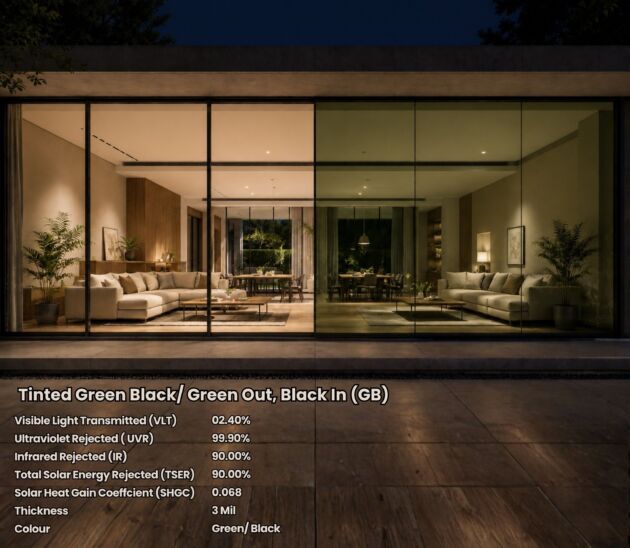

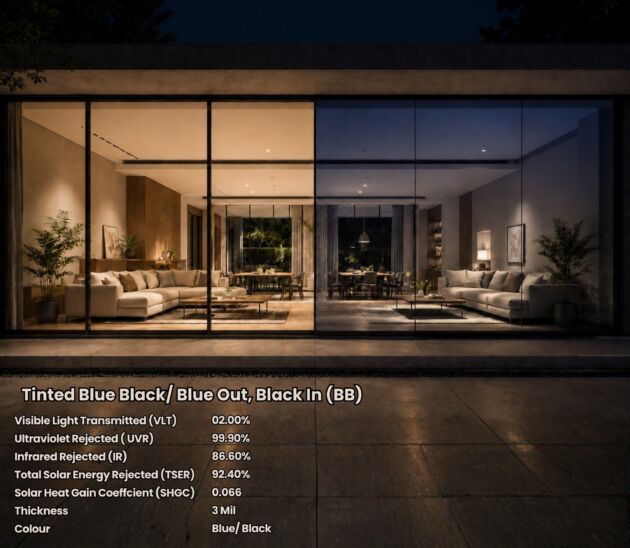


Description
Main Components of Mirror Window Film
1. Polyester Film (PET Film)
This is the base material, providing strength, flexibility, and clarity.
It is heat-resistant and tensile, making it the foundation of most window films.
2. Metal Coating
Usually consists of an ultra-thin layer of metals such as aluminum, titanium, silver, or others.
This layer gives the film its “mirror reflection” effect, allowing it to reflect sunlight, which enhances heat insulation and protects privacy. It also helps prevent furniture from fading or aging due to sun exposure.
3. Dyed or Absorptive Layer
The absorptive layer is designed to absorb solar heat, further improving the film’s insulation performance.
4. UV Coating
This layer filters out ultraviolet rays to protect the skin from damage.
Feature of Specification Mirror Tinted
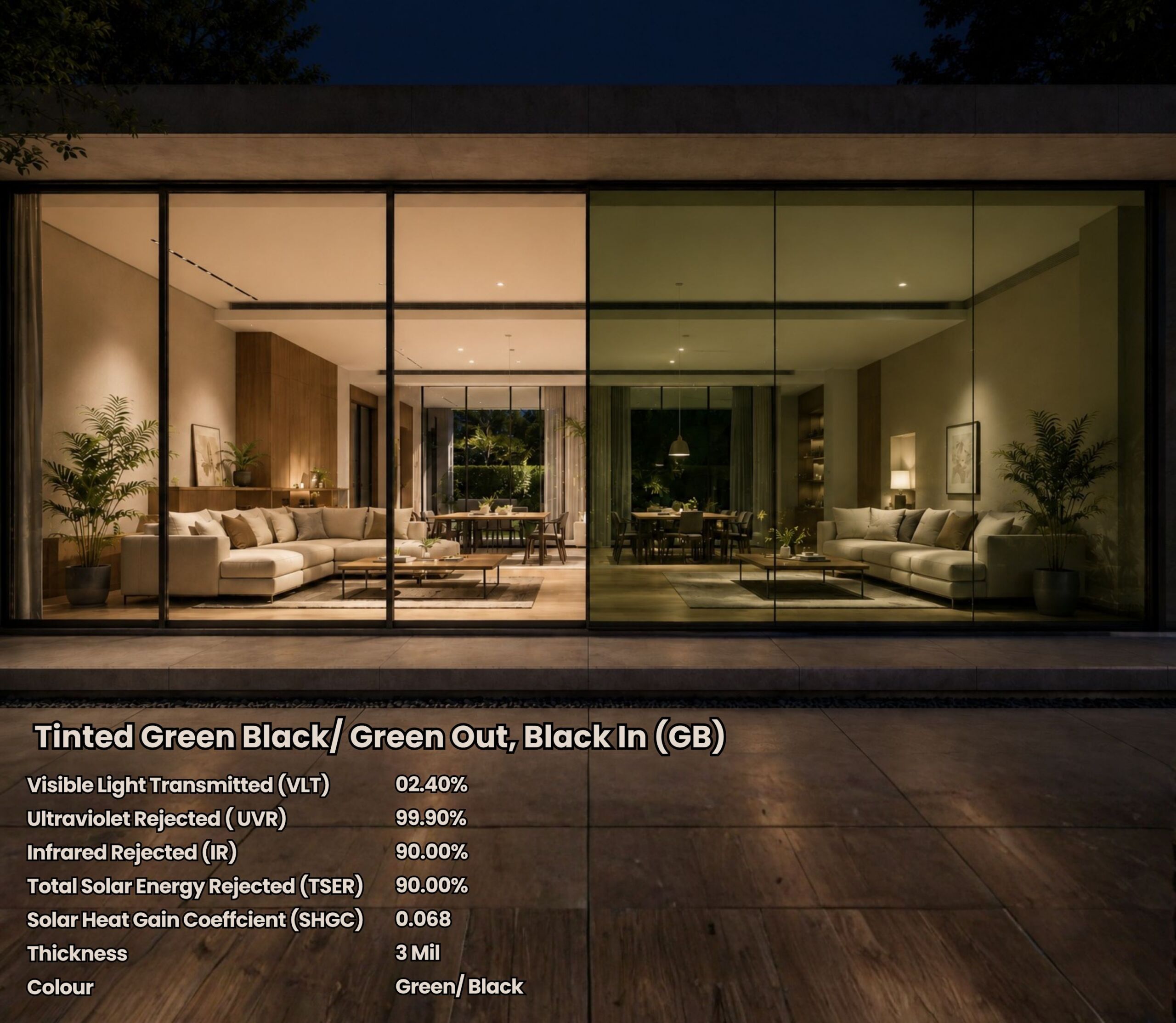
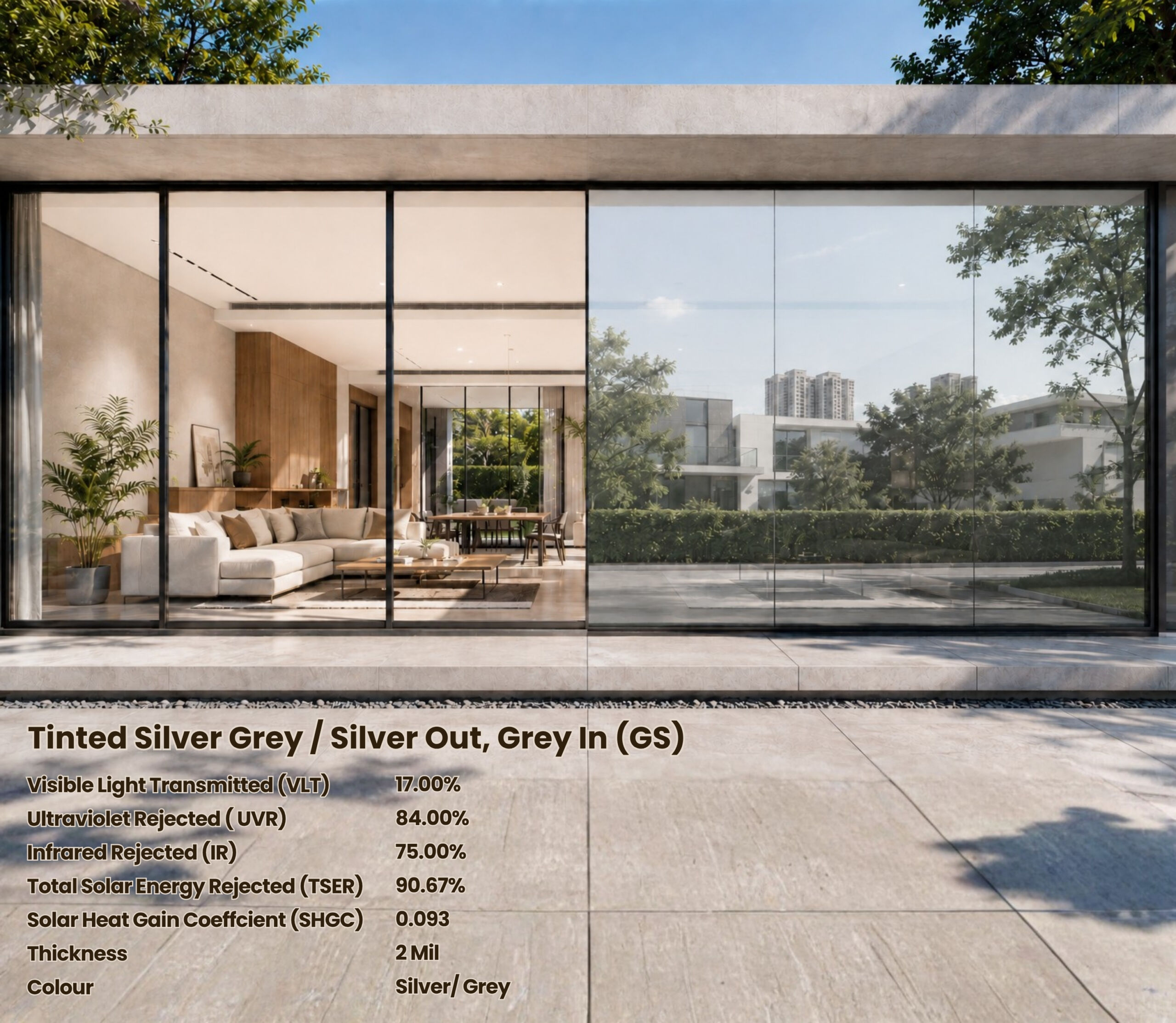
1. Visible Light Transmitted (VLT)
Definition: The percentage of visible (natural) light that passes through the window film into the interior. Example: VLT 70% means 70% of visible light can pass through.
2. Ultraviolet Rejected (UVR) – UV Blocking Rate
Definition: The ability of the film to block harmful ultraviolet (UV) rays. UV rays can cause fading of furniture and damage to skin. Example: The higher the UVR, the better the protection.
3. Infrared Rejected (IR) – Infrared Heat Blocking Rate
Definition: The percentage of infrared radiation (responsible for heat) blocked by the film. Infrared rays are the main source of heat from sunlight. A higher IR rejection means better heat reduction.
4.Total Solar Energy Rejected (TSER) – Overall Solar Energy Blocking Rate
Definition: The total amount of solar energy (including UV, visible light, and infrared) that is blocked by the film. TSER is a comprehensive measure of the film’s heat rejection performance. A higher TSER indicates better energy efficiency and cooling performance. Example: TSER 70% means 70% of total solar energy is blocked.
5. Solar Heat Gain Coefficient (SHGC) – Amount of Solar Heat Entering
Definition: The fraction of solar radiation that passes through the glass and becomes heat inside. This is the opposite of TSER – the lower the SHGC, the better the heat insulation. Example: SHGC = 0.30 means only 30% of solar heat enters, which is energy-efficient.


Reviews
There are no reviews yet.